
Choosing the Right Yale Rigging Rope: XTC-12, Portland Braid, Double Esterlon, and Polydyne
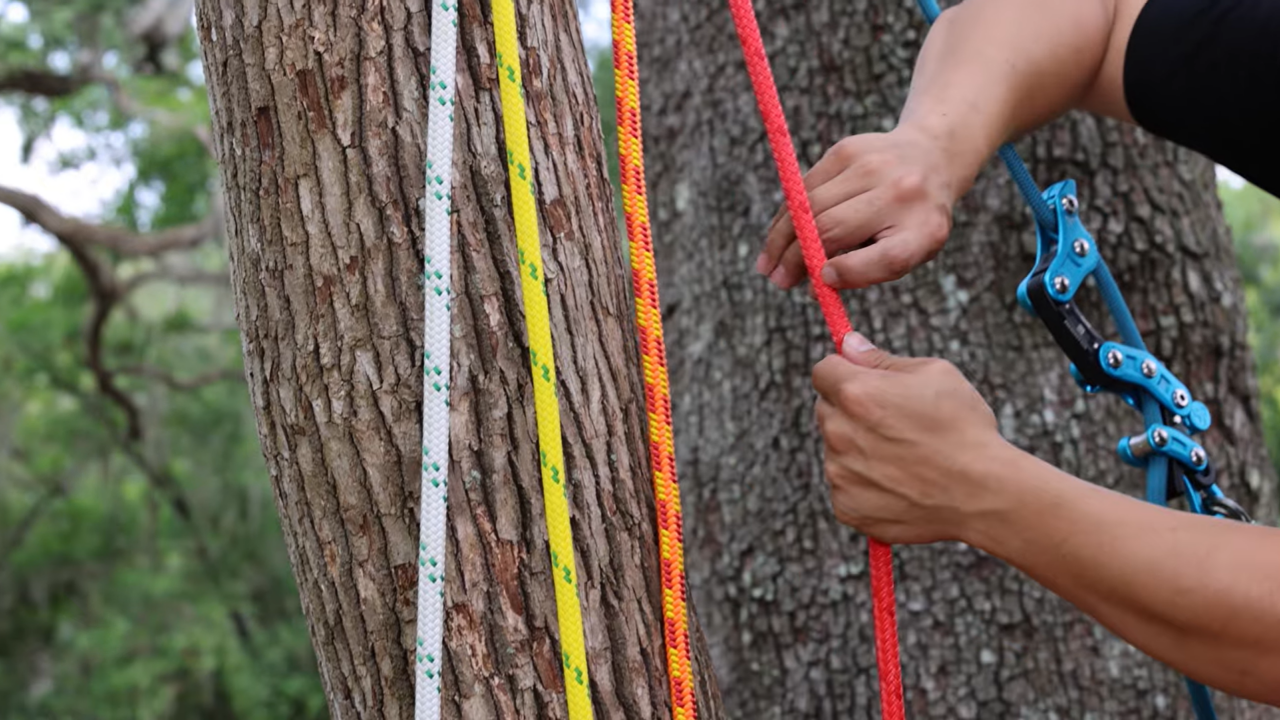
When choosing a rigging rope, it’s easy to focus on diameter and breaking strength. But ropes that look similar on paper can behave very differently in the field. Construction, fiber type, stretch, abrasion resistance, and energy absorption all influence how a rope handles—and, more importantly, which applications it is best suited for.
Yale’s XTC-12, Portland Braid, Double Esterlon, and Polydyne illustrate those differences particularly well. Each is a capable rigging rope, but each has a distinct construction and performance profile. Understanding those differences makes identifying—and selecting—the right rope much easier.
See the Differences Up Close
Specifications tell an important part of the story, but sometimes the easiest way to understand the differences between ropes is simply to see them side by side.
In our Yale Rigging Rope Identification Made Easy video, Arborist Market Manager Eric Banderas takes a closer look at XTC-12, Portland Braid, Double Esterlon, and Polydyne, highlighting the visual characteristics that can help distinguish one construction from another.
Eric explores the ropes up close, giving arborists a practical look at the differences in braid, texture, construction, and other identifying features. It’s a useful companion to the technical information below, connecting what the specifications say with what you can actually see and recognize in the field.
XTC-12: Simple, Tough, and Easy to Handle
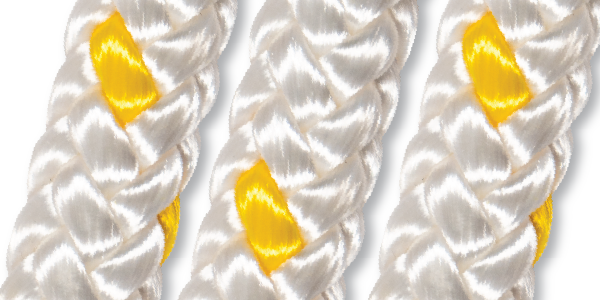
The easiest place to start is XTC-12 because its construction immediately separates it from the other three ropes.
XTC-12 is a 12-strand single braid, meaning there is no separate cover and core. Its polyester/“Para-ep” Olefin construction produces a noticeably nubby, firm surface and a rope designed to remain round under use.
That texture is one of XTC-12’s defining characteristics. The larger diameter and nubby hand make it easy to grip, including while wearing gloves. Its tightly laid strands also help maximize abrasion resistance and reduce snagging while maintaining enough suppleness for practical handling.
Because there is no core, XTC-12 offers a relatively straightforward, economical construction. It resists rot and mildew and performs in wet or dry conditions, making it a practical commercial-grade choice where durability, handling, and value are priorities.
Think XTC-12 when you want: a single-braid rope with good abrasion resistance, straightforward construction, a distinctive hand, and economical performance.
Portland Braid: Dependable Performance at an Economical Price
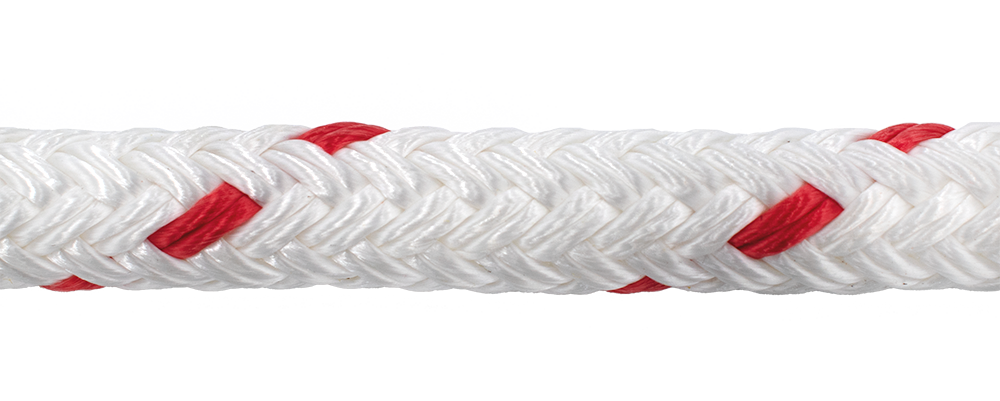
Portland Braid moves us into double-braid construction, with a braided cover surrounding a braided core.
Its biggest selling point is value. Portland Braid is designed to provide consistent double-braid polyester performance at a competitive price. It offers low stretch, good wear life, and straightforward splicing.
It is constructed in the same general manner as Yale’s Double Esterlon, which can make the two ropes seem similar at first glance. The distinction is in their positioning and materials. Portland Braid uses fiber sourced through Yale’s qualified suppliers and emphasizes economical, consistent performance.
It can also be special ordered in exceptionally long continuous lengths, and an optional Maxijacket urethane coating can be applied when additional wear resistance is desirable.
Think Portland Braid when you want: a practical, low-stretch polyester double braid where value and dependable everyday performance matter.
Double Esterlon: Premium Polyester Performance
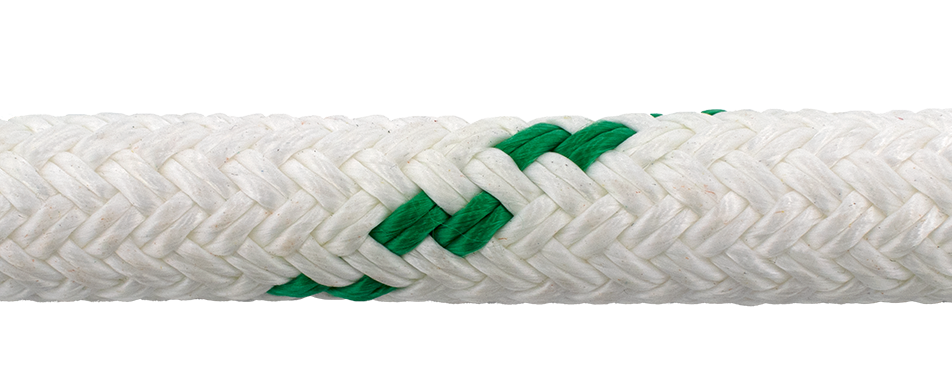
If Portland Braid is the value-oriented polyester double braid, Double Esterlon represents the premium end of that category.
Double Esterlon uses premium over-finish polyester fiber in both its sleeve and core. Before twisting, the yarn receives a marine-grade treatment, and the rope incorporates a high-performance finish intended to reduce yarn-on-yarn abrasion.
The result is a balanced double braid with low stretch, excellent wear life, high dielectric strength, and excellent spliceability. Yale describes Double Esterlon as its highest-strength double-braid polyester rope.
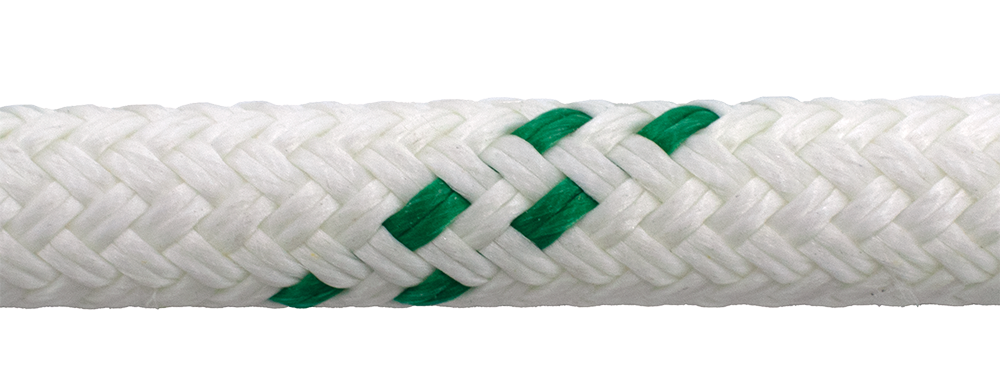
Identification is also relatively straightforward: two green strands are braided into the cover structure, providing a useful visual cue.
Like Portland Braid, Double Esterlon can receive Yale’s optional Maxijacket urethane coating for additional wear resistance.
Think Double Esterlon when you want: premium polyester construction, low stretch, high strength, excellent wear characteristics, and predictable double-braid performance.
Polydyne: Built to Absorb Energy
Polydyne is where the comparison changes significantly.
It is also a double braid, but unlike Portland Braid and Double Esterlon, it does not use polyester for both major components. Instead, Polydyne combines a polyester sleeve with a nylon core.
That difference matters because nylon stretches considerably more than polyester. Yale engineers the construction so that the dissimilar fibers work together, creating a rope with high breaking strength while providing substantially more stretch within its working-load range.
In many rigging situations, that stretch is an advantage.
When a load is moving and then suddenly arrested, the rope must absorb energy. A rope capable of elongating under load can dissipate more of that energy rather than transmitting the entire shock through the rigging system. That makes Polydyne particularly well suited to applications involving dynamic loading.
Its working energy-absorption capability is therefore one of the most important specifications to understand. Polydyne is designed to withstand repeated dynamic loading without prematurely degrading, while its polyester jacket provides the wear resistance needed for demanding field use.
Think Polydyne when you want: high strength combined with greater elongation and exceptional energy absorption for dynamic rigging applications.
Four Ropes, Four Different Priorities
The important lesson isn’t that one of these ropes is universally “better” than the others. It is that their construction reveals what each rope is designed to accomplish.
XTC-12 stands apart as the single braid: simple, firm, abrasion resistant, easy to grip, and economical.
Portland Braid is the value-focused polyester double braid: low stretch, durable, spliceable, and dependable.
Double Esterlon takes polyester double-braid construction further with premium fibers, specialized finishing, excellent wear life, and high strength.
Polydyne changes the equation by introducing a nylon core, providing greater stretch and energy absorption for applications where dynamic forces are a major consideration.
That distinction is particularly important in rigging. Selecting rope shouldn’t come down to color, diameter, or breaking strength alone. A rope is part of a system, and its behavior under load matters just as much as the number printed in the catalog.
The simplest way to remember these four is:
- XTC-12 = single-braid simplicity and abrasion resistance.
- Portland Braid = economical polyester double braid.
- Double Esterlon = premium, high-performance polyester double braid.
- Polydyne = dynamic energy absorption.
For a closer look, watch Arborist Market Manager Eric Banderas walk through the visual differences and identifying characteristics of all four ropes in Yale Rigging Rope Identification Made Easy.