
River Max: Four Years in the Field. Still Delivering Strength
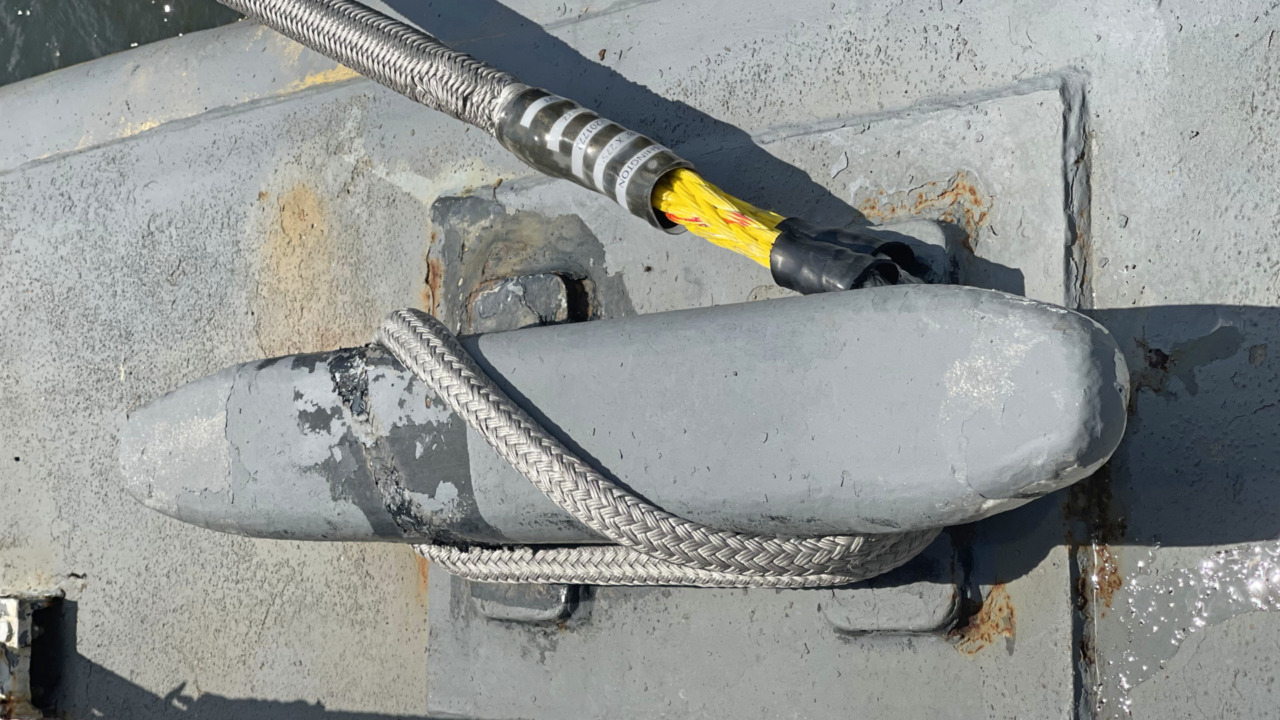
| 156,494 LBS Break Test Result Used 1-1/2 in. River Max | 86,642 LBS Break Test Result Used 1-3/8 in. River Max |
Catalog strength tells you where a rope starts. Field performance tells you what it can still do after years of work. In June 2026, Yale Cordage tested two used River Max HMPE Double Braid samples that had been in the field for four years. Each sample underwent repeated load cycling before a final pull to failure. The results show substantial remaining strength after extended service.
WHAT WAS TESTED
Both samples were used River Max rope from lot RMA 4634. Yale Cordage performed T/T with Break testing on June 9, 2026. Each rope was cycled 11 times at its specified cycle load before the final break result was recorded.
| River Max size | Field history | Cycle load | Cycles | Break Test Result |
| 1-3/8 in. | 4 years | 66,600 lbs | 11 | 86,642 lbs |
| 1-1/2 in. | 4 years | 62,000 lbs | 11 | 156,494 lbs |
The standout result came from the used 1-1/2” River Max sample. After four years in the field, the sample was cycled 11 times at 62,000 lbs and then continued into the final break pull, reaching a maximum load of 156,494 lbs. These are controlled test loads, not recommended working loads. The Catalog Spliced Minimum Breaking Strength is 150,000 lbs. So even with four years of wear in the field, this rope not only demonstrated substantial remaining break strength, it outperformed its catalog minimum break strength.
WHY FOUR-YEAR FIELD PERFORMANCE MATTERS
A new-rope specification is an important baseline, but it is only one point in a rope’s life. Operators depend on ropes after months and years of loading, handling, bending, abrasion, weather exposure, and day-to-day use. That makes remaining strength after extended service a critical part of the performance story.
After four years in the field, these River Max samples still tolerated repeated high-load cycling before being pulled to failure. The results do not replace inspection, retirement criteria, or application-specific engineering judgment; they do show why long-term durability and strength retention matter alongside initial catalog numbers.
THE ORIGINAL TEST: PUTTING LONG-TERM PERFORMANCE TO THE TEST
The earlier River Max field study began with a rare opportunity to compare two ropes exposed to the same inland marine application under the same operating conditions.
River Max and a competitor’s rope were placed into demanding face line service aboard inland marine vessels. Both experienced continuous use involving repeated loading, abrasion, environmental exposure, and the everyday punishment associated with securing and positioning barges.
The competitor entered the comparison with a higher published breaking strength. After extended service, the ropes were removed and break tested. River Max broke above its rated strength, while the competing rope failed well below its original rating.
The results demonstrated an important distinction between initial breaking strength and long-term strength retention.
FROM DAY ONE TO YEAR FOUR
A single successful test can demonstrate performance. Repeated testing over multiple years begins to demonstrate a pattern.
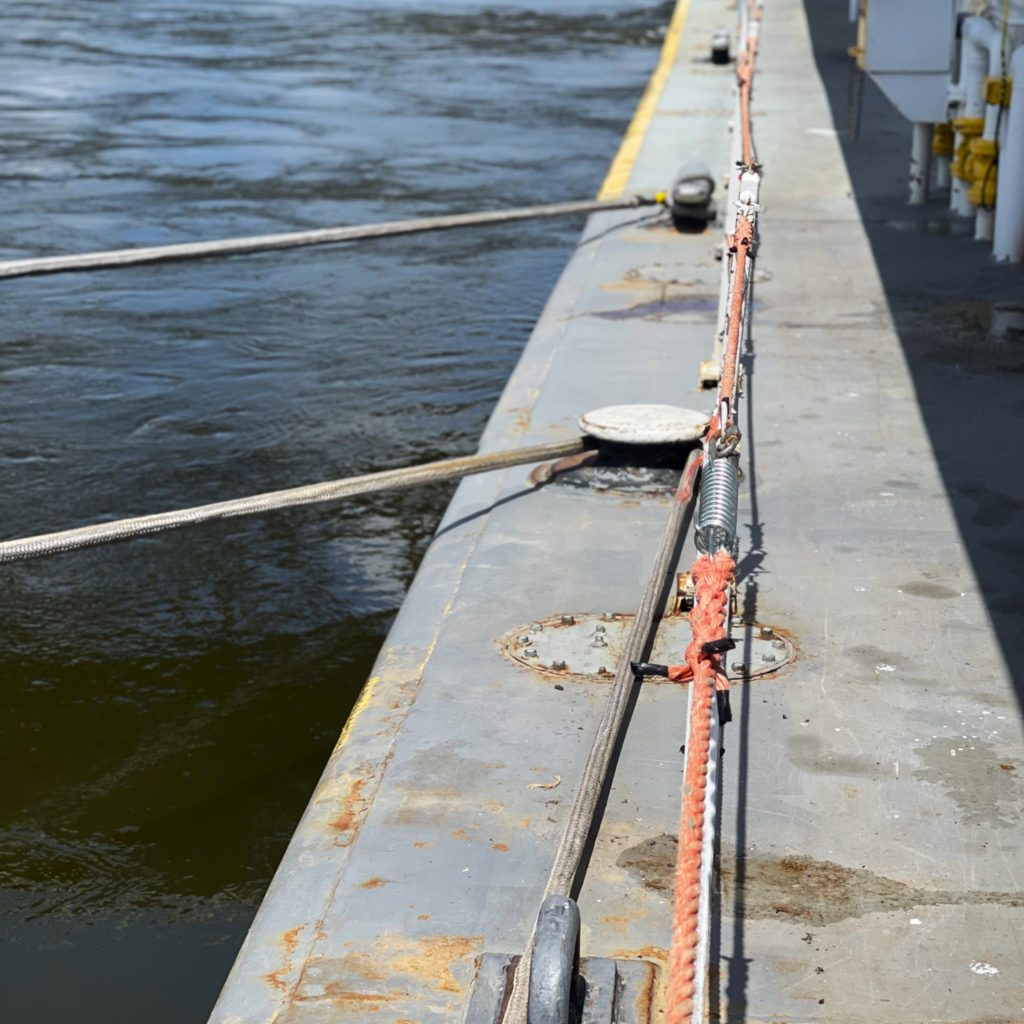
The significance of the latest River Max results isn’t limited to the 156,494-lb break itself. The new testing builds upon what Yale Cordage had already observed during its earlier long-term field evaluation.
After approximately three years, River Max demonstrated exceptional strength retention in comparison with a competing product.
Now, after four years in the field, additional used River Max samples have again demonstrated substantial remaining strength.
River Max is engineered as a high-performance double-braid rope for demanding marine and industrial environments. The value proposition is not simply high strength when new; it is protecting the rope’s load-bearing structure so the product can continue to perform through real service. These 2026 used-rope break tests provide a tangible example of that durability story.
For operators evaluating rope beyond the spec sheet, the message is straightforward: long-term performance matters. River Max is engineered to keep working – and these four-year field samples show the strength that can remain after years of service.